
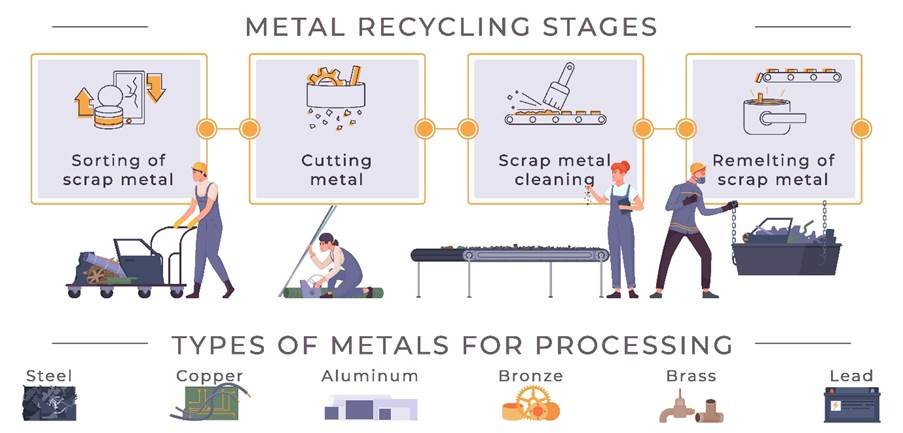
A metal recycling importance in India takes old metal stuff – gathers it, separates types, works it over so it can be used again. Setting one up right means thinking ahead, following many rules, putting money into equipment and buildings. Here’s what you need to know about making that happen
- Metal recycling importance in india
- Types of Metals and Processes
- Step‑by‑Step Setup Guide
- Licenses and Clearances Needed
- Compliance and Reporting
- Environmental and Safety Standards
- Investment and Operational Costs
- Challenges and Best Practices
1. Why Metal Recycling Matters in India
Recycling metal matters a lot these days. Across India, tons of scrap come from factories, cities, even building sites – so reusing it cuts down what gets tossed away:
- Using less raw material means fewer mines tear up the earth. A lighter touch on nature comes when old metals get another life instead of digging fresh ones out. Every reused bit chips away at destruction hidden underground. What once was mined can stay buried if recycling fills the gap.
- Recycling slashes energy needs compared to making new metals from raw materials.
- One way to back a circular economy is by meeting national green targets. Matching local efforts helps push broader environmental aims forward.
2. Types of Metals and How They Are Recycled
Metal recycling plants may focus on:
Ferrous Metals
- Fragments of cars, broken machines, old fridges – these feed the flow of metal into furnaces. Out come heavy beams and sheets shaped by heat. Buildings shed chunks during demolition, sending slabs clattering onto trucks. Factories pass along worn tools instead of trashing them. Melted down, it all becomes something again.
- Starting with separation, ferrous scrap gets crushed into dense chunks before being torn apart by powerful shredders. After that comes high-heat fusion inside industrial ovens where raw metal pools slowly under intense temperatures. From there, cooled blocks emerge – solid forms ready for future shaping. Each phase flows without pause once compression finishes.
Non‑Ferrous Metals
- Mining these – aluminum, copper, brass, zinc, lead – pulls bright, sought-after materials from the ground. Their weight runs low yet markets prize them. Wiring harnesses hold them, vehicles carry their parts, containers often rely on their strength.
- Sorting by hand comes first, then materials get shredded into smaller pieces. After that, magnets pull out metals while spinning currents grab others. Finally, everything melts down so it can be cleaned up.
3. Step‑by‑Step Setup Guide
A. Market Research and Feasibility
Begin with a detailed market analysis:
- Demand and supply of scrap metals locally and regionally.
- Pricing trends for raw scrap and recycled output.
- Picking up scrap often draws interest from places like steel mills. Foundries show up too, wanting material. Manufacturers join the mix, always on the lookout
- Competitive landscape and barriers to entry.
This check needs to back up how much the plant can handle – say 5, 10, maybe even 50 tonnes a day – while showing it makes financial sense too.
B. Business Entity Registration
Start by picking a setup: sole run, shared control, formal partnership, or private firm. Each must sign up through the corporate ministry or area offices nearby. Get identity tags like tax number and goods service code if you follow green governance rules. These help meet legal steps plus handle dues properly across checks and filings.
C. Land Acquisition and Zoning
- Pick a plot in an area cleared by city planners. Land must have green light from regional offices. Go for spots marked safe by inspection teams. Select space checked and confirmed legal. Stay away from zones without paperwork signed off.
- A stretch of ground needs space for holding supplies, areas where work happens, room to set up equipment, also features that manage emissions. Size matters when it comes to fitting all these parts in one place.
- Finding approval through zoning rules could depend on local laws. Switching how land is used might need official sign-off, depending on city policies.
D. Environmental Layout and DPR
Prepare a detailed project report with all necessary components
- A plan of where things go sits next to a sketch showing how stuff moves through. One draws paths, the other marks spots – both shape how work unfolds across space.
- Pollution control measures.
- Waste management plan.
- Safety provisions.
Getting a full DPR makes it easier to clear pollution checks. One solid step forward comes from having every detail ready ahead of time.
E. Pollution Regulatory Approvals
Secure Environmental Licenses From The State Pollution Control Board Before Plant Construction Or Operation
1. Consent to Establish
Fitted only after getting approval, this permit checks if the project fits within ecological limits. Starting construction without it skips a step meant to review how well plans follow environmental rules.
2. Consent to Operate
A green tag appears once setup finishes, showing filters work, trash flows right, machines stand by. Green means go.
f. Safety Installation and Infrastructure
Install infrastructure for:
- Polluted air gets cleaned by dust catchers. Where water comes into play, waste liquids go through cleanup steps before leaving the site.
- Local fire rules shape how safety setups are built. What the department says decides each part of the system. Rules from authorities guide every feature in place. How alarms and exits work follows official directions closely. Safety measures match what inspectors require by law.
4. Permission and License Required
1. Business Registration
Filing official paperwork sets up your company by law, while getting a GST number keeps taxes in line. Your business needs both steps to follow government rules properly.
2. Consent to Establish
Holding this comes from the SPCB, shaped by laws meant for water and air protection. Without it, starting builds or buying equipment isn’t allowed – period.
3. Consent to Operate
Before starting up, check pollution controls and waste setups – confirmed through SPCB. Equipment must be in place, verified by the board’s inspection team. Only after clearance does full function begin.
4. Hazardous Waste Authorization
A factory handling battery production, metal coatings, or similar dangerous materials must have approval from the SPCB. This comes under the rules for managing hazardous and related waste types. Without that green light, operations can’t move forward legally.
5. Fire Safety NOC
Firesafety checks come straight from neighborhood inspectors – exits marked, alarms tested. Each route out gets a once-over before approval arrives by memo. Smoke detectors? Always live, always checked twice yearly. Authority stamps go on file after walkthroughs finish. Exit signs glow steady through drills held every season.
6. Building Plan Approval
Work must get approval from area officials prior to building the site.
7. Shops and Establishments Act
A workspace out in the open needs a listing with the local work office. That step follows rules meant for places you can walk into.
8. Additional Clearances if Applicable
A permit may be needed to bring in metal scraps, depending on trade rules set by DGFT. Entry of raw material could require official clearance under current guidelines.
Depending on which metals are handled, certain clearances apply. What gets approved ties directly to the material involved.
5. Compliance and Reporting
A license granted, the facility keeps meeting rules without pause. Staying approved means daily attention never fades. After opening, each operation follows set standards closely. Running legally requires constant checks continuing always. With permission secured, actions stay within limits strictly
Environmental Monitoring
- Regular emissions and dust control monitoring.
- Water passing through machines gets tested afterward. Sometimes it flows back only when cleaned properly.
Record Maintenance
- Daily logs for material movement and processing.
- Footprints left behind when trash takes its exit route. What gets reborn from the scraps set aside yesterday. Trails marked where materials change form again.
Periodic Reporting
Some state pollution boards demand yearly check-ins on environmental rules. Reports often include air or water quality readings along with proof of rule following. Occasionally, updates come every three months instead. Details might shift based on location or industry type. What matters is showing consistent tracking over time.
6. Environmental And Safety Standards
Besides handling scrap metal, workers face constant exposure to airborne particles. Molten spills show why protective barriers matter most. Noise levels often demand hearing safeguards without exception.
- Filters that catch dust before it spreads into the air.
- Fresh air flow cuts down fumes people breathe at work.
- When flames break out, follow the steps made for those moments. Spills that happen by mistake need their own clear actions taken right away.
- Protective gear for workers.
Frequent checks by government bodies help ensure rules are followed, while proper safety records play a key role in getting or updating environmental permits. Sometimes it’s the regional office taking charge, other times national agencies step in. Paperwork showing safe practices often decides whether approval continues.
7. Investment and Operational Costs
Capital Costs
Initial investment typically includes:
- Land acquisition in an industrial area.
- Fittings go in after machines arrive. Tools get set up along with gear.
- Pollution control systems (dust collectors, effluent treatment).
- Civil construction and infrastructure setup.
- Safety and fire prevention systems.
Spending shifts with how much a facility can produce along with the tech used, yet setting up full safety and rule-following systems matters most so work doesn’t stall or fines hit.
Operational Costs
- Folks handling sorting tasks, while others take charge of moving things through steps – management fits in later on down the line.
- Fuel for heating, power at home, water use – each adds up differently depending on where you live. Bills shift when seasons change, how much you run appliances matters too.
- Maintenance of machinery and control systems.
- Frequent checks on nature’s condition along with reports that follow set rules. What happens shows up clearly through routine observation plus required paperwork.
Fresh cash comes through selling reprocessed metal bars, along with leftover materials that find new uses. Quality-checked recycled stock can fetch higher prices now and then, depending on market mood.
Conclusion
A metal recycling plant in India can turn profit while doing social good. Not just helping the environment, yet meeting growing needs for reused industrial inputs. Still, getting it right means thinking ahead, knowing which permits are required, staying on track with rules. Even small missteps in handling emissions or worker conditions might unravel progress made elsewhere.