
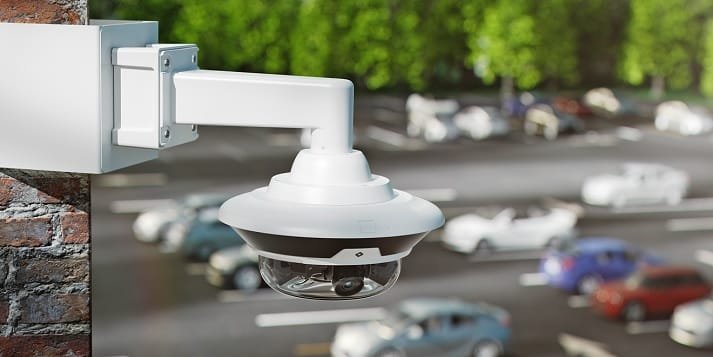
Businesses worldwide face increasingly sophisticated security challenges, from theft and vandalism to data breaches and workplace incidents. Did you know that businesses equipped with visible security measures can experience a reduction of up to 50% in theft incidents?
To address these concerns, many organizations are turning to advanced surveillance solutions such as VIGI, which combine intelligent monitoring with reliable video management.
Modern video surveillance has evolved far beyond traditional cameras, offering advanced features that help businesses monitor, protect, and manage their premises effectively. For growing organizations, safeguarding assets, employees, and customers is a top priority.
Modern surveillance systems provide real-time visibility, allow for proactive incident management, and offer valuable documentation that can be used for investigations, compliance, and insurance purposes.
Understanding the role and benefits of these systems is critical for any business seeking to strengthen its security posture.
Understanding Modern Video Surveillance
Modern video surveillance systems today are characterized by high-definition cameras, networked recording devices, and intelligent software with centralized monitoring and management capability.
Gone are the days when users would deal with analog CCTV systems—later generations such as present solutions offer features such as motion detection, remote access, cloud storage, and enriching AI-powered analytics with self-learned ability to look out for unusual activities automatically.
These highly integrated systems deliver a complete tool for security of businesses of various sizes through integration with all their other security measures: access control systems, alarms, and emergency response procedures.
Why Video Surveillance Matters Today
In the fast-moving environment of modern business, threats to security could come about anywhere and at any time. Moreover, video surveillance is often both an overt deterrent and an oversight mechanism at the same time. Where the cameras are visible, the possibility of theft and any sort of mischief is substantially less. If an event occurs, recorded feed will become useful as evidence.
Surveillance systems are created to assist with smoother business operations. Therefore, overseeing daily operations, inventory area observation, and examining and analyzing customer service standards help managers locate inefficiencies and, consequently, improve business operations.
With video monitoring centrally set up across several locations, security personnel can oversee terrorism across the sites, with improvement in response time while reducing any potential gaps in monitoring.
Key Benefits of Modern Video Surveillance
Modern-day video monitoring offers a number of significant advantages. It provides further security for workers and customers, allowing for quick detection of any suspicious activity or emergencies. High-resolution cameras deliver sharp images; day/night vision allows for continuous surveillance around the clock.
The next level of functionality is brought about by smart analysis with respect to any unusual movement, behaviors, or overcrowded conditions. Also, remote access allows business heads to watch every action happening at their premises from anywhere, allowing for around-the-clock oversight even when personnel are at a vantage point.
Common Use Cases for Business Surveillance
Various industries have simply squandered wide applications of video surveillance. Retail outlets employ an efficient CCTV surveillance system to prevent any possible theft or even to deter it; CCTV sprung anywhere in warehouses or factories guards against thefts and secures inventory or ensures the safety of the workers in the name of the workplace.
Jointly with the entrance, common areas, and secure zones, offices mostly use surveillance. Surveillance cameras in restaurants and hotels are mostly employed to monitor customer zones and activities. In each public institution, be it school, hospital, or transportation hub, surveillance tends to be in private with a view to ensure security and operational control.
How to Choose the Right Video Surveillance System
The choice of the right system depends on the size and field needs, as well as on security concerns. Choices depend on the camera type, resolution, storage options, and whether or not it works with current security systems.
Scalability is even one of the essential business considerations, as one must opt in for systems that permit the addition of more cameras or performance feature additions in the future. A properly planned system will allow for reliability and good investment over the longer term.
Best Practices for Deployment and Maintenance
In the effort to achieve the objectives of video surveillance, it is necessary for cameras to be adequately covered by their categories and aim to expose critical points without leaving any vulnerable spots in the design. Regular periodical maintenance is mandatory, as it gives special emphasis or consideration to the cleansing of lenses, software upgrades, and system health checks, ensuring workability.
Businesses are expected to regularly screen, store, and deliver footage with supervision to assure privacy and legal regulation. Regular watching of recorded footage and evaluation of the system can keep the security operation operative and responsive.
Video surveillance is often an integral part of business security. They give businessmen peace of mind through real monitoring, wide area coverage, and actionable intel, and ultimately help them protect their assets and staff and increase general efficiency.
A well-implemented security design will best protect business interests in the best way possible and prepare for unknown security challenges.
You can also Read About it:
Understanding the Special Education Qualification Process for Students