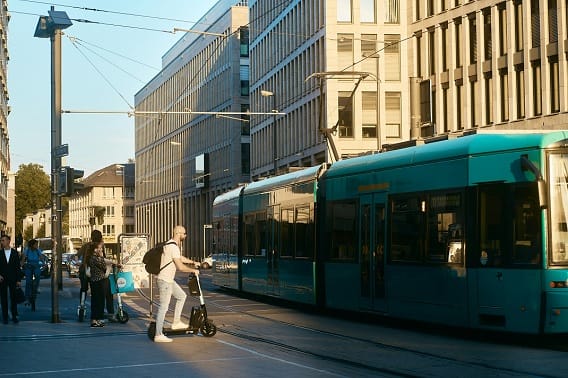
Urban mobility has transformed dramatically over the last decade. From ride-hailing and bike-sharing to real-time traffic monitoring, technology now shapes how people move in cities.
As a McKinsey & Company article states, mobility is entering an age of innovation, thanks to the emergence of ride-sharing options. It is one of the hottest sectors worldwide, with new technologies and transportation options emerging constantly. Moreover, consumers are excited about these new options, be it e-bikes or autonomous shuttles.
Mobility apps have become essential for managing urban transport efficiently, offering convenience and real-time insights to both riders and operators. These apps are no longer just about booking a ride; they now serve as comprehensive platforms that improve safety, reduce congestion, and create smarter transportation networks.
Artificial Intelligence in Urban Mobility
Artificial intelligence (AI) and data analytics are driving some of the most significant changes in mobility apps. AI can predict traffic patterns, optimize route planning, and help dynamically manage fleet availability, allowing operators to adjust in real-time to changing conditions.
These capabilities can also enhance user experience by reducing wait times and improving route reliability. Google Research has launched Mobility AI, a program aimed at transforming cutting-edge research into practical technologies for urban transportation.
By integrating these innovations into Google Public Sector and Google Maps Platform, the program provides tools for data-driven decision-making, efficient traffic management, and ongoing monitoring. Transportation agencies, planners, engineers, researchers, and policymakers can use these tools for enhanced mobility.
Developers can use this platform to develop AI algorithms that can fit their company’s requirements. Thanks to these benefits and use cases, the use of AI in the transportation market is expected to increase significantly.
Precedence Research states that the AI in the transportation market was worth $5.53 billion in 2025. It could experience a CAGR of 22.70% from 2025 to 2034. This will help the market reach a whopping $34.83 billion in value.
Communication and User Engagement
Effective communication with users is now a core component of mobility apps. Apps can notify riders of delays, suggest alternative routes, or provide recommendations for nearby services based on real-time context. These engagement tools build trust and loyalty while also collecting valuable insights into user behavior, helping operators refine their services.
Beyond convenience, clear and interactive communication enhances safety by alerting users to any operational issues. Uber is doing the same to enhance user safety.
As highlighted by TorHoerman Law, the number of Uber sexual assault cases is increasing. Many victims have cited that Uber failed to protect them from assault, harassment, and other misconduct by drivers.
These victims have even filed Uber lawsuit claims against the company. As a response, Uber came up with safety features that promote in-app communication. For instance, it offers 24/7 support that riders can access from within the application. Additionally, there’s also a safety button provided in the app that connects to nearby emergency services with a single tap.
Such communication, user engagement, and safety features can ensure riders feel connected to the platform throughout their journey.
How can mobility apps use feedback systems without overwhelming users?
Effective feedback systems focus on relevance and timing rather than frequency. Mobility apps can prioritize short, context-aware prompts that appear only when user input is most helpful, such as after a completed trip or a resolved issue. Thoughtful design ensures feedback feels useful rather than intrusive, encouraging higher response rates and better insights.
Advanced Mapping and Routing Platforms
Modern mapping and routing platforms are critical for urban mobility apps, especially as cities become more congested. A CNBC article mentions a traffic scorecard report by INRIX. The report found that an average American driver lost around 43 hours because of traffic congestion in 2024. To put things in perspective, that is around an average work week, causing losses worth $771.
The report highlighted the cities with the worst congestion, which was topped by New York City. It was followed by Chicago, Los Angeles, and Boston.
Mapping and routing tools combine real-time traffic updates, historical data, and predictive analytics to provide smarter routing options for drivers. The result is more accurate estimated arrival times, less idle time, and optimized navigation across complex urban landscapes. For instance, by integrating advanced Traffic Flow Traffic Management systems within urban mobility apps, cities can further optimise route efficiency and reduce congestion through real-time data analytics and intelligent signal coordination.
As urban mobility platforms evolve to support multimodal transportation and relocation needs, integrating services like https://www.shiply.com/us/car-shipping/florida-car-shipping can help users manage vehicle transport seamlessly when moving between cities or states.
Additionally, operators can analyze usage patterns to determine high-demand areas. This can help them plan efficient fleet deployment and even identify alternative routes during peak hours or unexpected events.
These tools can also help improve road safety. Researchers from the University of British Columbia created an algorithm that can identify the safest possible route to reach from point A to point B. It does so by using real-time crash risk data. The algorithm can also be easily integrated with navigation apps.
Can advanced routing tools support accessibility needs for elderly or disabled users?
Yes, modern routing platforms increasingly account for accessibility by incorporating data on curb ramps, elevator availability, sidewalk quality, and crossing times. Mobility apps can use this information to suggest routes that minimize physical strain or avoid barriers. This approach improves inclusivity and allows a wider range of users to travel confidently within dense urban environments.
Smart Fleet and Vehicle Management
Fleet management software is seeing rapid innovation, transforming how mobility providers maintain their vehicles and ensure driver efficiency. MarketsandMarkets notes that the global fleet management software market is estimated to grow at a CAGR of 18.7% from 2025 to 2032. It was worth $1.58 billion in 2025 and can reach $5.23 billion by the end of the forecast period.
Modern platforms monitor vehicle performance, track maintenance schedules, and even analyze driver behavior in real-time. Predictive AI can alert operators to potential mechanical issues before they become critical, suggest fuel-efficient driving practices, and optimize scheduling to reduce downtime.
These tools also support dynamic routing and task allocation, allowing fleets to adapt quickly to changing demand patterns. Integrating AI with smart vehicle management not only improves operational efficiency but also ensures higher safety standards, contributing to a more reliable urban mobility ecosystem. Companies can maintain a proactive approach, reducing costs and improving overall service quality for riders and drivers alike.
How do fleet management tools support sustainability goals in urban transport?
Smart fleet platforms contribute to sustainability by tracking fuel usage, emissions, and idle time across vehicles. With this data, operators can identify inefficiencies, transition to electric or hybrid vehicles more effectively, and plan routes that reduce congestion. Over time, these insights help cities lower their environmental impact while maintaining reliable transportation services.
As urban centers continue to expand, mobility apps must adopt advanced tools to remain effective and competitive. Artificial intelligence, predictive analytics, smart fleet management, and interactive user engagement will define the next generation of urban transport solutions.
By combining these technological innovations with ethical practices and regulatory awareness, developers can create apps that are efficient, safe, and user-centric. The future of urban mobility relies on platforms that can anticipate the needs of both cities and users. It can seamlessly integrate technology into everyday travel and contribute to more sustainable, intelligent urban transport systems.
You can also Read About it:
Office Interior Decorators in Bangalore: Redefining Productivity