
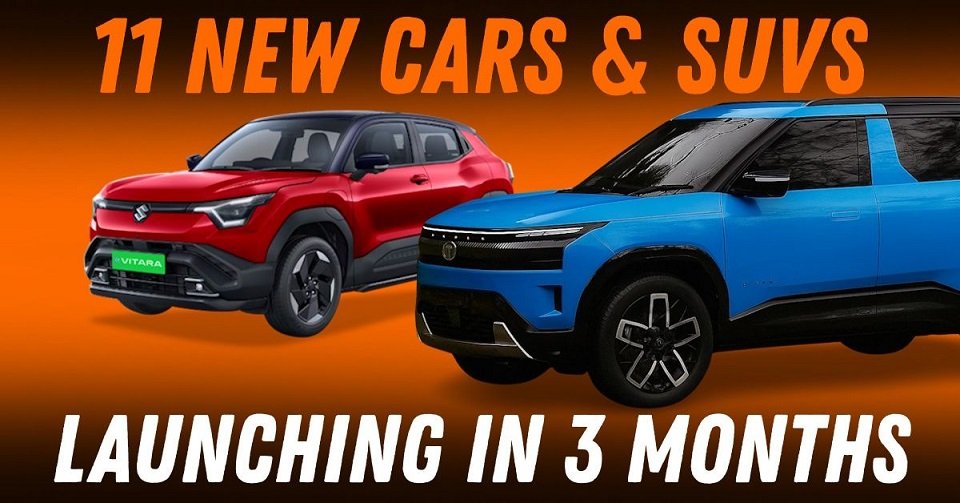
The automotive industry never sits still. Every year brings a new wave of launches, concept reveals, and technological breakthroughs that reshape how we think about driving. From electric vehicles redefining long-distance travel to safety systems that can prevent accidents before they happen, car news in 2024 has been nothing short of remarkable. Whether you’re a die-hard enthusiast or simply looking for your next vehicle, staying informed on the latest developments can help you make smarter decisions—and appreciate just how fast the industry is evolving.
What Are the Biggest Car Launches of 2024?
Automakers have pulled out all the stops this year, with several headline-grabbing debuts across every segment.
Ford Mustang Dark Horse continues to dominate conversations among performance enthusiasts, delivering a naturally aspirated 5.0L V8 with enhanced suspension tuning for track use. Meanwhile, BMW’s Neue Klasse platform has officially entered production, signaling the brand’s full commitment to an electric future built on an entirely new architecture.
On the luxury end, Rolls-Royce Spectre has entered the EV market with a range of approximately 320 miles—proof that sustainability and opulence aren’t mutually exclusive. The Chevrolet Equinox EV has taken a different approach, targeting affordability with a starting price under $35,000, making electric ownership more accessible than ever.
Key Stats on New Car Launches in 2024
- Over 40 new EV models were launched globally in 2024
- The global EV market is projected to reach $906 billion by 2028, according to Allied Market Research
- Battery electric vehicles (BEVs) now account for more than 18% of new car sales in Europe
What Innovations Are Shaping the Industry Right Now?
The engineering happening beneath the hood—and inside the cabin—is just as exciting as the vehicles themselves.
Solid-State Batteries
Perhaps the most anticipated breakthrough in automotive technology, solid-state batteries promise to dramatically improve energy density and charging speeds compared to conventional lithium-ion cells. Toyota has confirmed plans to bring solid-state battery-powered vehicles to market by 2027–2028, with projected ranges exceeding 745 miles on a single charge. If these targets hold, it would represent a fundamental shift in EV adoption.
Autonomous Driving Updates
Self-driving technology is advancing steadily, even if full autonomy remains years away. Waymo now operates a fully commercial robotaxi service in Phoenix and San Francisco, logging millions of driverless miles. Tesla’s Full Self-Driving (FSD) system, meanwhile, has rolled out Version 12—a neural network-based update that handles far more complex driving scenarios than its predecessor.
- Waymo completed over 1 million paid robotaxi rides in 2023
- The global autonomous vehicle market is expected to grow at a CAGR of 22.3% through 2030, per Grand View Research
Advanced Driver Assistance Systems (ADAS)
Even without full autonomy, modern ADAS technology is saving lives. Features like automatic emergency braking (AEB), lane-keep assist, and blind-spot monitoring are now standard on a growing number of vehicles. The Insurance Institute for Highway Safety (IIHS) estimates that AEB systems reduce rear-end crashes by up to 50%.
How Is the Electric Vehicle Market Performing?
The EV sector continues to outpace expectations, though challenges remain.
Global EV sales hit a record 14 million units in 2023, according to the International Energy Agency (IEA). China remains the dominant market, accounting for roughly 60% of global EV sales, followed by Europe and the United States. Charging infrastructure is expanding rapidly, with the US targeting 500,000 public chargers by 2030 under the Bipartisan Infrastructure Law.
However, growth hasn’t been without friction. Automakers including Ford and General Motors have scaled back near-term EV production targets in response to softer-than-expected consumer demand in certain segments. Battery raw material costs—particularly lithium and cobalt—remain volatile, impacting vehicle pricing across the board.
EV Adoption at a Glance
| Metric | Figure |
| Global EV sales (2023) | 14 million units |
| EV share of global car sales (2023) | ~18% |
| US public charging stations (2024) | ~170,000+ |
| Projected EV market size by 2030 | $1.3 trillion |
What’s Happening With Hybrid Technology?
While the EV conversation dominates headlines, hybrids are quietly having a moment. Toyota—long the champion of hybrid technology—reported that its hybrid models accounted for nearly 30% of total global sales in 2023. The Toyota RAV4 Hybrid and Camry Hybrid continue to top sales charts, appealing to buyers who want improved fuel economy without committing to a full EV.
Plug-in hybrids (PHEVs) are also resurging in popularity, particularly in Europe, where consumers benefit from government incentives and can run primarily on electric power for daily commutes while retaining a combustion engine for longer trips.
How Are Safety Standards Evolving?
Vehicle safety is reaching new heights, driven by stricter global regulations and consumer expectations.
The Euro NCAP updated its testing protocols in 2023 to include more rigorous assessments of ADAS features, pedestrian detection, and occupant protection. In the US, the National Highway Traffic Safety Administration (NHTSA) is pushing to mandate AEB systems on all new passenger vehicles by 2029.
Cybersecurity has also emerged as a key concern. As vehicles become more connected, the risk of remote hacking grows. In response, the United Nations Economic Commission for Europe (UNECE) introduced WP.29 regulations requiring automakers to demonstrate robust cybersecurity management systems before bringing new vehicles to market.
What Does the Future of Car Design Look Like?
Aesthetically, vehicles are undergoing a transformation. The removal of the traditional combustion engine has freed designers to rethink proportions, interiors, and aerodynamics from the ground up.
Flush door handles, panoramic glass roofs, and minimalist interiors with large central screens have become defining features of modern EVs. Hyundai’s IONIQ 6, for example, has won multiple design awards for its aerodynamic “electro-streamliner” silhouette—a shape that directly contributes to its impressive EPA-estimated 361-mile range.
Inside the cabin, the shift toward large touchscreens and over-the-air (OTA) software updates is blurring the line between car and connected device. Mercedes-Benz’s MBUX Hyperscreen stretches across the entire dashboard, integrating navigation, entertainment, and vehicle controls into a single curved glass surface.
Frequently Asked Questions About Car News and New Releases
What is the best-selling electric vehicle in 2024?
The Tesla Model Y retained its title as the world’s best-selling EV heading into 2024, though strong competition from Chinese automakers—particularly BYD—is intensifying.
Which automakers are investing the most in EV development?
Volkswagen Group, General Motors, Ford, and Stellantis have each committed over $30 billion to EV development through the end of the decade. Toyota, while traditionally focused on hybrids, has announced a $70 billion investment in electrification through 2030.
Are new cars getting more expensive?
Yes. The average transaction price for a new vehicle in the US reached approximately $48,000 in 2023, according to Kelley Blue Book—a significant increase from pre-pandemic levels driven by supply chain disruptions, inflation, and increased demand for higher-trim models.
When will fully autonomous vehicles be widely available?
Most industry analysts expect Level 4 autonomy (where a vehicle can handle all driving tasks in defined conditions without human input) to become available in specific use cases—like robotaxis—by the late 2020s. Widespread consumer availability is more likely a 2030s milestone.
The Road Ahead
The automotive world is moving at a speed that would have seemed impossible just a decade ago. Solid-state batteries, robotaxis, cybersecurity frameworks, and design-forward EVs are no longer distant concepts—they’re arriving in showrooms and on roads right now.
Keeping pace with these changes isn’t just for industry insiders. For everyday consumers, understanding what’s new and what’s next means better buying decisions, greater road safety, and a clearer picture of where transportation is headed. The next time you see a new model roll past, there’s a good chance it represents years of engineering innovation—and a glimpse at the future of mobility.